Introduction
Taking your dog for a walk while pushing a stroller can be enjoyable, but it requires more than simply attaching a leash and heading outside. If your dog pulls toward interesting smells, lunges at passing people, or becomes distracted by wheels and movement, the stroller can make an ordinary walk feel difficult. Learning how to train a dog to walk beside a stroller without pulling or lunging gives you better control while helping your dog feel calm and confident around this new walking environment.
The key is not to expect perfect behaviour immediately. Dogs need time to understand that a stroller is simply another part of the walking routine. With thoughtful preparation, reward-based training, appropriate equipment, and gradual exposure, most dogs can learn to walk politely beside a moving stroller.
Why Stroller Walking Can Be Challenging for Dogs
A stroller changes the usual walking experience. It is larger than a person, moves unpredictably from a dog’s perspective, makes different sounds, and can restrict how freely the handler responds to the dog’s behaviour.
A dog that normally walks well beside you may suddenly pull when the stroller begins moving. Some dogs are curious about the wheels, while others may become nervous when the stroller approaches from behind or passes close to them.
Understanding the underlying reason for the behaviour is important. Pulling can result from excitement, frustration, curiosity, fear, or simply a history of being rewarded by reaching something interesting.
This is where understanding Animal Behavior Science can help. Instead of treating every pulling episode as disobedience, consider what your dog is trying to communicate and what consequence is reinforcing the behaviour.

Prepare Your Dog Before Introducing the Stroller
Before attempting a full outdoor walk, make the stroller a familiar object at home. Place it somewhere your dog can investigate without pressure.
Allow your dog to sniff it while it is stationary. Reward calm behaviour with small, valuable treats. Avoid pushing the stroller directly toward the dog during the first few sessions.
Once your dog can remain relaxed around the stationary stroller, introduce small movements. Push it a short distance across the room and reward your dog for remaining calm.
The goal is to build a positive association. Your dog should learn that the stroller predicts good things rather than something frightening or exciting.
Teach Loose-Leash Walking Separately
If your dog already pulls heavily on normal walks, work on loose-leash walking before adding a stroller. Trying to solve leash pulling and stroller-related excitement simultaneously can make training unnecessarily difficult.
Start in a quiet area. Walk a few steps with a loose leash, reward your dog for staying near you, and gradually increase the distance between rewards.
When your dog pulls, avoid automatically dragging them back. Instead, stop or change direction, wait for the leash to become loose, and reward your dog when they return their attention to you.
Build a Reliable Attention Cue
A simple cue such as “look,” “with me,” or your dog’s name can be extremely useful.
Practise the cue without the stroller first. Say the cue, reward your dog for looking at you, and gradually practise around mild distractions.
Eventually, your dog should be able to hear the cue and redirect attention toward you even when something interesting is happening nearby.
Introduce the Stroller Gradually
Once your dog is comfortable with the stationary stroller and can walk reasonably well on a loose leash, combine the two skills.
Begin with the stroller beside you while it remains stationary. Ask your dog to stand or sit calmly, then reward relaxed behaviour.
Next, move the stroller only a few steps. Reward your dog if they remain beside you without pulling.
Keep the first sessions short. Five successful minutes are more useful than a 30-minute session filled with frustration.
Walk Without Going Anywhere at First
You do not need to immediately leave the house.
Push the stroller around a quiet room, driveway, patio, or enclosed area. This lets your dog experience the wheels, movement, and sounds while distractions remain manageable.
If your dog starts staring at the wheels, pulling forward, or becoming anxious, slow down and create more distance. Wait for calm behaviour before continuing.
Reward the Position You Want
Dogs repeat behaviours that produce worthwhile consequences. If you want your dog to walk beside the stroller, reward that exact behaviour.
Give the reward when your dog’s leash is loose and they are positioned safely beside the stroller. Over time, gradually reduce the frequency of treats while continuing to reinforce good walking with praise, sniffing opportunities, and occasional rewards.
How to Stop Pulling Beside a Stroller
Pulling is particularly problematic when pushing a stroller because the handler has fewer hands available to manage the leash.
Rather than waiting until your dog reaches the end of the leash, watch for early signs of tension. Your dog may speed up, lower their head, fix their attention on something, or begin moving toward the end of the leash.
When you notice these signs, calmly redirect them before the pulling becomes intense.
Use Direction Changes
If your dog repeatedly pulls forward, calmly change direction before they gain momentum.
When your dog follows you and the leash becomes loose again, reward them. This teaches your dog that staying connected to the handler is more rewarding than forging ahead.
Avoid jerking the leash or making sudden corrections. A stroller already introduces unusual movement, and harsh handling can increase stress or excitement.
Make the Right Behaviour Easy
Your training environment matters. Start somewhere quiet rather than immediately practising on a busy pavement filled with bicycles, children, vehicles, other dogs, and pedestrians.
As your dog improves, gradually introduce more distractions.
This process is sometimes called changing the difficulty level gradually. If your dog succeeds consistently, make the environment slightly more challenging. If your dog repeatedly fails, reduce the difficulty.
How to Stop Lunging at People, Dogs, or Other Distractions
Lunging requires special attention because it can cause you to lose control of the leash while handling the stroller.
First, identify your dog’s triggers. Does your dog lunge at other dogs? People? Bikes? Cars? Scooters? Fast-moving objects?
Once you know the trigger, maintain enough distance that your dog can notice it without immediately reacting.
Reward your dog for looking at the distraction and then returning attention to you.
Work Below Your Dog’s Reaction Threshold
A dog that is already barking, lunging, or straining against the leash is usually too overwhelmed to learn effectively.
Increase your distance from the trigger until your dog can remain relatively calm. Then reward appropriate behaviour.
With repetition, you can gradually reduce the distance.
This approach is more productive than forcing your dog to remain close to a trigger while they are highly distressed.
Practise Emergency Turns
A reliable emergency turn can give you an important safety option.
Teach your dog that when you say a specific cue, they should turn with you and move in the opposite direction. Practise this without the stroller first, then introduce the stroller in a quiet environment.
The behaviour should become automatic before you rely on it around major distractions.
Choose Equipment That Supports Training
Good equipment does not replace training, but it can make training safer and more manageable.
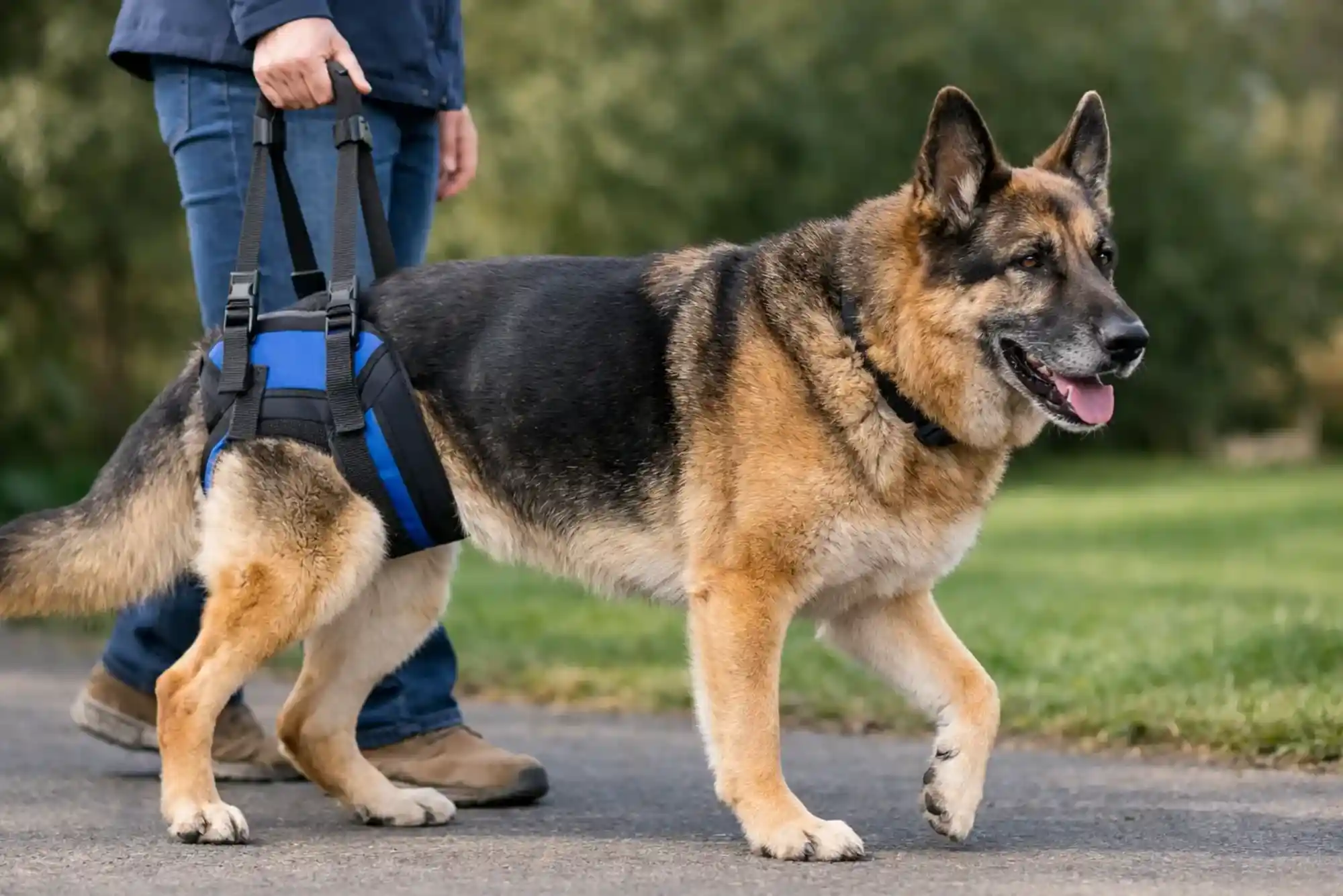
Use a properly fitted harness or collar appropriate for your dog’s size and individual needs. A harness with a suitable leash attachment may provide better control for some dogs, particularly during training.
Avoid equipment that causes pain or discomfort as a primary strategy for controlling pulling. The objective is to teach your dog what behaviour earns rewards rather than relying on fear or discomfort.
The stroller itself should also be stable, easy to manoeuvre, and appropriate for the terrain where you plan to walk.
For additional dog-training and educational resources, Expertloom can be a useful place to explore broader animal behaviour topics.
Create a Safe Stroller-Walking Routine
Consistency makes training easier. Try to keep your walking routine predictable, particularly during the early stages.
Give your dog an opportunity to relieve themselves and sniff before expecting focused walking. A dog with excess energy or an unmet need to explore may find controlled stroller walking considerably harder.
Keep the leash at a comfortable length without allowing enough slack for it to become tangled around the stroller wheels.
Never attach the dog’s leash directly to the stroller unless the equipment is specifically designed and tested for that purpose. Your dog should remain under your direct control.
What to Do When Your Dog Suddenly Reacts
Even a well-trained dog can have an unexpected reaction.
If your dog suddenly lunges, stay calm. Stop the stroller safely if possible and create distance from whatever triggered the response.
Do not punish the dog after the reaction. Instead, focus on regaining calm behaviour.
Once your dog has settled, consider what happened. Was the trigger too close? Was your dog tired? Was the environment unusually busy? Did the stroller move suddenly?
Identifying the cause helps you adjust the next training session.
How Long Does Stroller Training Take?
There is no universal timetable. A confident adult dog with strong loose-leash skills may adapt relatively quickly, while a reactive or inexperienced dog may require weeks or longer.
Progress should be measured by behaviour rather than the calendar.
Your dog may first tolerate a stationary stroller, then walk beside it indoors, then walk outside in a quiet location, and eventually handle busier routes.
Do not rush through these stages simply because your dog performs well once or twice.
Reliable behaviour comes from repeated successful experiences.
Common Mistakes to Avoid
One of the biggest mistakes is starting with a difficult environment. A crowded park is rarely the best place for a dog’s first stroller walk.
Another mistake is expecting the dog to stay perfectly beside the stroller for an extended period. Dogs need opportunities to sniff, explore, and decompress.
Using too many commands can also create confusion. Keep your cues simple and reward the behaviour you want.
Finally, avoid continuing a session after your dog becomes overwhelmed. Training should challenge your dog without repeatedly pushing them beyond their ability to cope.
When Professional Help Is Appropriate
If your dog has a history of serious lunging, aggression, panic, or escaping from equipment, consider working with a qualified reward-based trainer or veterinary behaviour professional.
Professional guidance is especially valuable when the behaviour creates a genuine safety risk for your dog, your child, pedestrians, or other animals.
A professional can assess the specific trigger, identify the likely motivation behind the behaviour, and develop a controlled training plan.
Practical Safety Tips for Walking With a Stroller
Safety should always come before training progress. Keep the stroller within your direct control and avoid allowing your dog to cross in front of its wheels.
Pay attention to your surroundings rather than constantly watching the dog. You need to monitor traffic, pedestrians, cyclists, uneven surfaces, and other potential hazards.
Avoid using a phone while moving the stroller and handling the leash.
If the environment becomes too busy, turn around or find a quieter route. A successful walk does not have to be long.
For additional guidance on walking with dogs and strollers, you can review the AKC Stroller Walking Guidelines and adapt general recommendations to your dog’s temperament and training level.
How to Build Long-Term Success
The most effective approach is to make good behaviour part of your dog’s normal routine.
Continue rewarding calm walking even after the behaviour appears reliable. Rewards do not always have to be food. Verbal praise, access to a favourite sniffing spot, and permission to explore can all become useful reinforcers.
Vary your routes gradually, introduce distractions one at a time, and continue practising attention cues.
Most importantly, remember that stroller walking is a skill. Your dog is not expected to understand automatically how to behave around a moving stroller.
With patience and repetition, the stroller can become an ordinary part of your dog’s walking environment rather than a source of excitement or anxiety.
Make Stroller Walks Calm and Predictable
Learning how to train a dog to walk beside a stroller without pulling or lunging is primarily about preparation, gradual exposure, clear communication, and positive reinforcement. Start with basic loose-leash skills, introduce the stroller slowly, reward calm behaviour, and increase distractions only when your dog is ready.
Do not measure success by how quickly your dog masters the process. Measure it by how calmly and consistently they can walk beside the stroller.
Ready to start? Begin with five minutes of calm stroller practice today in a quiet environment. Build from there, celebrate small improvements, and seek professional help if lunging or reactivity creates a safety concern.
FAQd
How do I get my dog to walk nicely beside a stroller?
Start by teaching loose-leash walking without the stroller. Then introduce the stationary stroller, followed by very short periods of walking beside it. Reward your dog whenever they remain calm and close to you.
How do I stop my dog from pulling while walking?
Stop moving or calmly change direction when the leash becomes tight. Reward your dog when they return to a loose leash. Consistent reinforcement teaches them that pulling does not help them reach what they want.
How do I stop my dog from lunging at other dogs while walking?
Identify your dog’s reaction distance and keep enough space between your dog and other dogs for them to remain calm. Reward them for noticing the other dog and then focusing back on you. Gradually reduce the distance as their behaviour improves.
Can I walk my dog while pushing a stroller?
Yes, provided your dog is adequately trained and you can maintain safe control of both the leash and stroller. Begin in a quiet environment and avoid crowded areas until your dog can walk reliably beside you.
What is the best way to train a dog not to pull on the leash?
Reward-based loose-leash training is a practical approach. Reward your dog for staying near you with a relaxed leash, and avoid allowing pulling to consistently result in reaching interesting people, animals, smells, or locations.
How long does it take to teach a dog to walk without pulling?
The timeline varies considerably between dogs. Some improve within several training sessions, while others need weeks or longer. Consistency, the dog’s temperament, previous learning history, and the difficulty of the environment all affect progress.
Related Reading: Feline Hyperthyroidism: Weight Loss with Increased Appetite Symptoms and Treatment — full guide
Related Reading: Best Heavy Duty No-Pull Harnesses for Pitbulls, Boxers, and Strong Pullers