
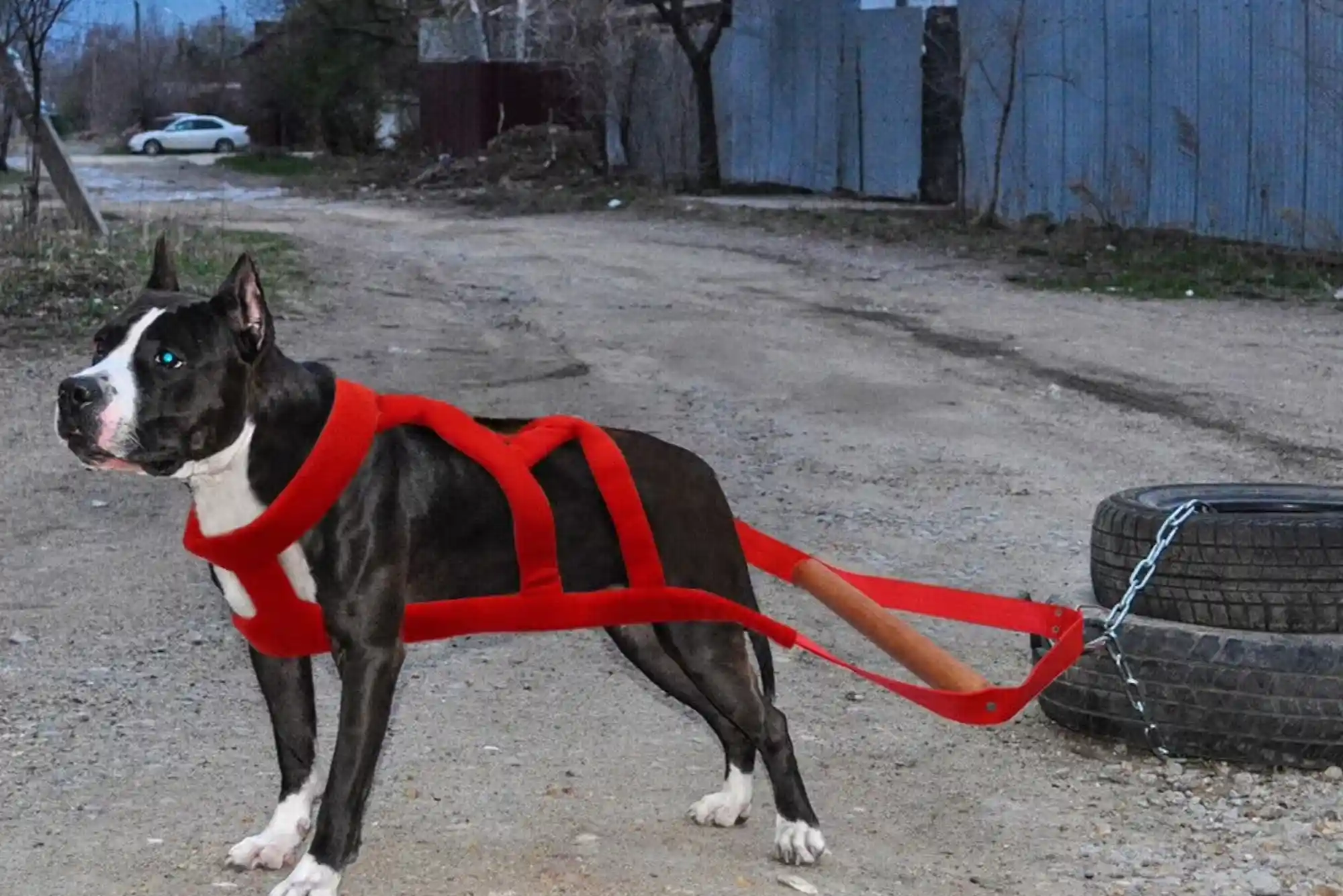
Introduction
Walking a powerful dog should feel controlled and predictable, not like a daily test of your strength. Pitbulls, Boxers, and other strong pullers can be energetic, muscular, and highly motivated by their surroundings. A standard collar or lightweight harness may not provide the control, durability, or comfort needed for these dogs. That is where heavy duty no-pull harnesses can make a meaningful difference.
The right harness does more than reduce pulling. It should distribute pressure appropriately, stay securely positioned when your dog moves, resist wear, and give you dependable control without creating unnecessary discomfort. Choosing one requires more thought than simply buying the strongest-looking option.
This guide explains what to look for in heavy duty no-pull harnesses, how different designs work, how to choose the right fit for a muscular dog, and how equipment should complement positive training rather than replace it.
Why Strong Dogs Need a Heavy Duty No-Pull Harness
A strong dog can generate considerable force when it sees another dog, spots wildlife, catches an interesting scent, or becomes excited about reaching a destination. Even a well-behaved dog may occasionally pull when something particularly interesting captures its attention.
A heavy duty harness is useful because it can provide a more secure connection between the dog and handler than a poorly fitted collar. A well-designed harness also spreads leash pressure across the dog’s torso instead of concentrating it around the neck.
However, “heavy duty” should not simply mean thick, bulky, or difficult to move in. The best harness combines strength with appropriate construction, adjustability, comfort, and useful leash attachment points.

For dogs that routinely pull, equipment works best alongside consistent training. Understanding canine movement and motivation through resources on Animal Behavior Science can help owners approach pulling as a behavior to teach, rather than a problem to overpower.
What Makes the Best Heavy Duty No-Pull Harnesses?
Not every no-pull harness is appropriate for a muscular Pitbull, Boxer, or similarly powerful dog. Several construction details deserve attention before making a purchase.
Durable Materials and Reinforced Stitching
Strong dogs can place substantial tension on straps, buckles, and seams. Look for high-quality webbing, reinforced stitching, robust adjustment points, and hardware designed for regular outdoor use.
Metal hardware can offer excellent durability, but the quality of the components matters more than their appearance. Plastic buckles can also be reliable when they are well engineered and appropriately rated.
Secure, Adjustable Fit
A harness should sit securely without restricting normal movement. If it is too loose, a determined dog may back out of it. If it is too tight, it can cause rubbing, discomfort, or restricted movement.
A useful fit usually allows enough room to place a couple of fingers beneath the straps while keeping the harness securely positioned.
Front and Back Leash Attachments
Many no-pull designs provide a front attachment point near the chest. When a dog pulls forward, the leash connection can encourage the body to turn rather than allowing the dog to put its entire weight directly into forward motion.
A back attachment can be useful for ordinary walking, hiking, or situations where your dog is already walking calmly.
Having both options gives owners more flexibility as training progresses.
Comfortable Chest and Shoulder Design
A strong harness should not interfere with the natural movement of the shoulders. Pay particular attention to where straps sit around the chest and front legs.
A harness can be extremely durable and still be a poor choice if it constantly rubs the armpits or restricts the dog’s stride.
Heavy Duty No-Pull Harnesses for Pitbulls
Pitbull-type dogs often have compact, muscular bodies and substantial chest development. This makes adjustability especially important.
When selecting a harness for a Pitbull, avoid choosing solely by weight. Two dogs with the same weight can have very different chest dimensions and body proportions.
Measure your dog’s chest according to the manufacturer’s instructions and compare those measurements with the actual size chart. If your dog is between sizes, the harness with better adjustment range may be preferable.
For a particularly determined puller, inspect the harness after every few walks during the first several weeks. Check stitching, buckles, adjustment points, and leash rings for unusual wear.
A strong dog should never be trusted with damaged equipment simply because the harness was originally marketed as heavy duty.
Heavy Duty No-Pull Harnesses for Boxers
Boxers are athletic dogs with plenty of energy, so walking equipment needs to accommodate movement rather than simply restrain it.
A good Boxer harness should allow comfortable shoulder movement while remaining stable around the chest. Because Boxers can be enthusiastic and unpredictable when excited, a secure fit is particularly important.
A front-clip design can be useful during training because it can make forward pulling less rewarding mechanically. Once the dog learns to maintain a loose leash, many owners may find a back attachment more convenient for relaxed walks.
The goal is not to make the harness do all the work. Instead, it should give the handler enough control to reinforce good walking behavior consistently.
How No-Pull Harnesses Actually Work
A no-pull harness does not magically teach a dog not to pull. Instead, its design can make pulling less efficient and give the handler better leverage.
With some front-clip harnesses, forward tension causes the dog’s body to rotate slightly toward the handler. This can interrupt the straight-line momentum that makes pulling effective.
That mechanical advantage can be particularly useful during training. When the dog stops pulling and returns attention to the handler, the owner can reward the behavior.
Over time, the dog can learn that walking beside the handler produces access to interesting things, rewards, movement, and exploration.
This approach is consistent with modern behavior-focused training: equipment manages the situation while learning changes the behavior.
How to Choose the Right Harness for a Strong Puller
Choosing among heavy duty no-pull harnesses becomes easier when you focus on your dog’s individual behavior rather than the marketing label.
Consider Your Dog’s Pulling Style
Does your dog pull constantly, or only when excited? Does it lunge toward other dogs? Does it try to back out of equipment? Does it pull toward smells and people?
A dog that attempts to escape may need a particularly secure design. A dog that simply walks quickly may need less restrictive equipment combined with loose-leash training.
Check the Harness Before Every Walk
Make inspection part of your routine. Look for frayed webbing, loose stitching, damaged buckles, bent rings, and straps that have slipped out of adjustment.
This takes less than a minute and can prevent a serious escape.
Introduce the Harness Gradually
Do not assume your dog will immediately love a new harness. Let your dog investigate it before putting it on.
Reward calm behavior around the harness. Put it on for short periods indoors and provide positive reinforcement. Then take brief walks before expecting your dog to handle a long outing.
This is especially helpful for dogs that are sensitive to new equipment.
Harness Training Should Come Before Long Walks
Even the best heavy duty no-pull harnesses cannot substitute for basic leash skills.
Start somewhere with few distractions. Reward your dog for standing or walking near you with a loose leash. When the leash becomes tight, avoid turning the situation into a tug-of-war.
Instead, pause, change direction, or wait for your dog to return attention to you. Once the leash is loose again, continue walking.
The timing of reinforcement matters. Reward the behavior you actually want: staying near you, checking in voluntarily, responding to your cue, and maintaining a relaxed leash.
For additional practical guidance on preventing pulling, Whole Dog Journal Pulling Prevention offers dog-training resources that can complement your harness strategy.
Common Mistakes When Using No-Pull Harnesses
One of the biggest mistakes is buying a harness and expecting immediate results. A no-pull design can improve management, but it does not automatically teach loose-leash walking.
Another common mistake is choosing an overly restrictive harness. Strong dogs need secure equipment, but discomfort can create resistance and make training more difficult.
Owners should also avoid relying exclusively on physical strength. If your dog is regularly lunging, reacting aggressively, or becoming impossible to control, consider working with a qualified force-free trainer or veterinary behavior professional.
Finally, do not ignore fit. A premium harness that does not fit your dog’s body correctly is not a premium solution for that individual dog.
Heavy Duty No-Pull Harnesses vs. Collars
Collars remain useful for identification and many ordinary walking situations, but they are not always the best primary equipment for a powerful dog that pulls hard.
A harness places the leash connection around the torso and can provide more control over the dog’s body. It may also be preferable for dogs whose owners want to avoid repeatedly applying leash pressure around the neck.
That does not mean every harness is automatically safer or better. Fit, construction, training technique, and individual anatomy all matter.
For owners researching the broader principles behind responsible pet care and behavior, Expertloom provides additional educational resources.
How to Get the Most From Your No-Pull Harness
Think of the harness as one part of a complete walking system.
Before leaving home, check the fit and hardware. During the walk, keep the leash at a manageable length and reward calm behavior. Give your dog opportunities to sniff and explore when appropriate instead of expecting a perfectly controlled heel for the entire walk.
Dogs are naturally interested in their surroundings. Allowing appropriate sniffing can make walks more enriching while still maintaining reasonable leash manners.
Consistency also matters. If pulling sometimes results in getting closer to another dog, person, or interesting smell, pulling can become self-rewarding. Try to make loose-leash walking the behavior that consistently produces forward progress.
When a No-Pull Harness Is Not Enough
Some dogs pull because they are excited. Others pull because of fear, frustration, prey drive, or reactivity. If your dog is lunging intensely, snapping, redirecting onto the leash, or repeatedly escaping equipment, the issue requires more than a stronger harness.
In these situations, prioritize safety and professional guidance. A qualified trainer can help identify why the behavior occurs and develop a training plan suited to the individual dog.
The harness should provide management while that training takes place.
Choose Strength, Fit, and Training Together
The best heavy duty no-pull harnesses for Pitbulls, Boxers, and strong pullers should offer a combination of durability, secure fit, comfort, control, and practical leash attachment options. The strongest-looking harness is not necessarily the best one; the right harness is the one that fits your dog’s body and supports your training goals.
Use the harness as a management tool, inspect it regularly, introduce it gradually, and reinforce calm leash behavior every time you walk. With the right equipment and consistent training, even a powerful dog can learn to make walks calmer and more enjoyable.
FAQs
What is the best harness for a dog that pulls hard?
The best harness depends on the dog’s body shape, behavior, and training needs. For strong pullers, look for durable construction, secure adjustment, comfortable chest coverage, and a useful front attachment point.
Do no-pull harnesses really work?
They can make pulling easier to manage by changing how leash pressure affects the dog’s body, but they do not permanently eliminate pulling by themselves. Consistent loose-leash training remains important.
Is a front-clip harness better for strong pullers?
A front clip can provide additional steering and reduce the mechanical advantage of forward pulling. It can be especially useful during training, although the correct choice depends on the individual dog.
What size harness should I get for my Pitbull?
Use your dog’s actual chest and neck measurements rather than relying only on breed or weight. Follow the specific manufacturer’s measurement instructions and choose a design with sufficient adjustment range.
Can a Boxer wear a no-pull harness all day?
A harness should primarily be used when appropriate for walking or supervised activities. Extended wear can increase the chance of rubbing, trapped moisture, or discomfort, particularly if the fit is poor.
Is a harness safer than a collar for a strong dog?
A properly fitted harness can provide better body control and reduce reliance on the neck when a dog pulls. However, safety depends heavily on correct fit, construction, supervision, and training.
How do I stop my strong dog from pulling permanently?
Teach loose-leash walking through consistent reinforcement and management. Reward your dog for staying near you, avoid rewarding tight-leash pulling with forward movement, and seek professional help when pulling is connected to significant reactivity or anxiety.


