
Introduction
Flying with dogs requires careful planning, especially when pets cannot travel inside the passenger cabin. Understanding flying with dogs as checked baggage or cargo helps owners prepare for airline requirements, temperature restrictions, and approved travel crates. Although these options allow dogs to travel internationally, their rules vary between airlines, aircraft, and destinations.
Temperature embargoes are particularly important because extreme heat or cold can threaten a dog’s safety. Similarly, an unsuitable crate can lead to denied boarding or unnecessary travel risks. Therefore, pet owners should understand the complete process before booking a flight.
This guide explains checked baggage, manifest cargo, temperature embargoes, and essential crate specifications. It also covers practical preparation tips for a smoother journey.
Understanding Flying with Dogs as Checked Baggage or Cargo
When researching flying with dogs as checked baggage or cargo, owners should understand the differences between these arrangements. Airlines generally classify pet transportation according to their handling procedures and booking systems.
Flying with Dogs as Checked Baggage
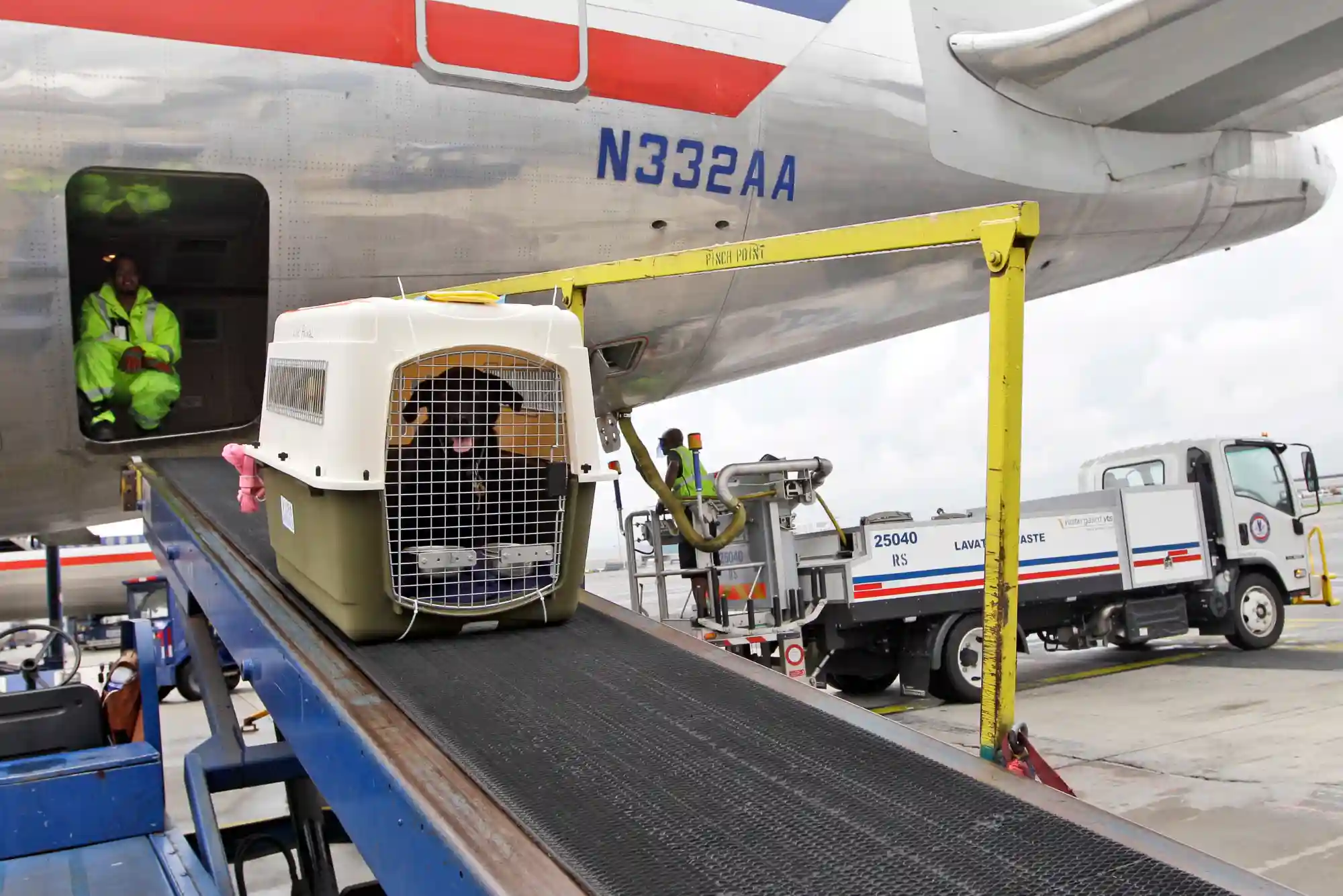
Checked baggage transport allows eligible dogs to travel in an approved, ventilated kennel within a designated aircraft compartment. The dog travels separately from the passenger but usually remains associated with the passenger’s booking.
This option may suit certain routes and airlines. However, availability depends on the aircraft, destination, dog breed, weight, and seasonal restrictions.

Owners must confirm whether their airline accepts pets as checked baggage. Some airlines have discontinued this service or permit it only on selected routes.
Flying with Dogs as Manifest Cargo
Manifest cargo involves booking a dog through an airline’s cargo department or an approved pet transportation agent. The arrangement may be available even when passenger pet services are restricted.
Cargo transportation is common for international relocations, large dogs, and journeys requiring specialized handling. However, it can involve additional documentation, separate collection procedures, and different fees.
Before choosing either option, compare the airline’s acceptance rules, transfer arrangements, and arrival procedures. The safest choice depends on the dog’s needs and the specific journey.
Temperature Embargoes and Their Importance
Temperature embargoes are restrictions that prevent airlines from transporting animals under certain weather conditions. These restrictions help reduce exposure to dangerous temperatures during loading, unloading, and ground transfers.
How Heat Restrictions Affect Dog Travel
High temperatures can increase the risk of overheating, dehydration, and heatstroke. Dogs with short noses, heavy coats, respiratory problems, or existing health conditions may face additional risks.
Airlines may restrict pet transportation when forecast temperatures exceed their operational limits. These restrictions can apply at departure, arrival, or connecting airports.
Importantly, a climate-controlled aircraft compartment does not eliminate every risk. Animals may spend time outside the aircraft during ground handling, depending on airport procedures.
Cold Weather Restrictions
Extreme cold can also create problems during airport transfers and ground handling. Young puppies, elderly dogs, and animals with certain health conditions may be especially vulnerable.
Some airlines impose seasonal restrictions or temperature limits for particular routes. Others assess conditions at individual airports or along the complete itinerary.
Because policies differ, confirm the applicable limits directly with the airline’s cargo department. Ask whether restrictions cover departure, arrival, and connecting locations.
What Happens When a Temperature Embargo Applies?
An embargo may prevent an airline from accepting a dog for a scheduled flight. The booking could require rescheduling, rerouting, or postponement until conditions improve.
Therefore, avoid planning a pet journey around a single flight without considering weather-related disruptions. Flexible travel dates can help owners manage unexpected restrictions.
Before departure, monitor weather forecasts and maintain contact with the airline. Never assume that an existing booking guarantees acceptance under changing weather conditions.
Airline Crate Specifications for Flying Dogs
An approved travel crate is essential when flying with dogs as checked baggage or cargo. The kennel must protect the animal, allow comfortable positioning, and meet the carrier’s applicable requirements.
Choosing the Correct Crate Size
The crate should allow the dog to stand naturally, turn around, sit, and lie down comfortably. The dog should not need to crouch continuously or press against the kennel walls.
Measure the dog’s height, length, and width carefully. Then compare these measurements with the airline’s current sizing instructions.
A crate that appears large enough at home may still fail the airline’s assessment. Some carriers use specific formulas or minimum dimensions for different animal sizes.
Ventilation and Construction
Airline-approved kennels generally require adequate ventilation and secure construction. Ventilation openings must meet the carrier’s applicable rules without creating opportunities for escape or injury.
The crate should have a secure locking mechanism and a strong, leak-resistant floor. Its materials must withstand normal handling during loading, unloading, and transportation.
For many international shipments, airlines follow standards influenced by the International Air Transport Association’s Live Animals Regulations. However, the exact requirements depend on the carrier and route.
Door, Water, and Bedding Requirements
The door must remain securely closed throughout transportation. Airlines may require specific door designs, fasteners, or additional securing measures.
Provide suitable water containers that handlers can access or refill when required. Follow the airline’s instructions for attaching containers and supplying food.
Absorbent bedding can improve comfort and manage small accidents. Avoid materials that could create choking hazards or obstruct ventilation.
Crate Labels and Identification
Clear identification helps handlers recognize the animal and contact the owner when necessary. Attach the required shipping documents and labels according to the airline’s instructions.
Include the dog’s name, owner contact details, and destination information where requested. Use any required live-animal or directional labels supplied by the carrier.
Never rely on labels as a substitute for proper crate construction. The kennel itself must satisfy all applicable acceptance checks.
Preparing Your Dog for Air Cargo Travel
Preparation can make flying with dogs as checked baggage or cargo less stressful. Start several weeks before departure, especially when international documentation is required.
Veterinary Checks and Travel Documents
Arrange a veterinary examination to assess whether your dog is fit to fly. Discuss breed-related risks, age, anxiety, and any existing health concerns.
Depending on the destination, requirements may include microchipping, rabies vaccination, a health certificate, import permits, and parasite treatments. Some countries also require blood tests or waiting periods.
Check the destination country’s official import rules before booking. Transit countries may impose additional conditions, even when your dog remains at the airport.
Crate Training Before Departure
Introduce the travel crate gradually rather than waiting until departure day. Encourage your dog to enter voluntarily using familiar bedding and positive reinforcement.
Allow your dog to spend increasing periods inside the kennel. Practice closing the door briefly while remaining nearby.
The goal is to make the crate feel familiar and secure. Avoid forcing the dog inside or using the crate only for stressful experiences.
Feeding and Hydration
Follow your airline’s instructions about feeding times before departure. A veterinarian can recommend an appropriate meal schedule based on your dog’s health and flight duration.
Provide access to water according to the carrier’s requirements. Avoid making sudden dietary changes immediately before travel.
Do not sedate your dog without veterinary guidance. Sedatives can affect balance, breathing, and temperature regulation, creating additional risks during transportation.
Common Mistakes to Avoid When Flying with Dogs
One frequent mistake is booking a flight before confirming animal acceptance. Airlines may restrict particular breeds, kennel sizes, aircraft types, or routes.
Another problem is overlooking connecting airports. A dog accepted for the first flight might face different restrictions during a transfer.
Owners should also avoid purchasing a crate based solely on their dog’s weight. Proper measurements and the airline’s specifications are more reliable.
Finally, never assume that summer or winter restrictions are identical across airlines. Confirm current temperature policies and contingency arrangements before paying for transportation.
Frequently Asked Questions
Can dogs fly as checked baggage or cargo?
Yes, some airlines accept dogs as checked baggage or manifest cargo. Availability depends on the airline, route, aircraft, destination, and applicable animal transport regulations.
What temperature is too hot for dogs to fly?
There is no universal temperature limit for every airline or route. Individual carriers may impose different thresholds based on operational conditions and animal welfare requirements.
Confirm the airline’s current temperature embargo policy before departure. Consider your dog’s breed, health, and exposure during airport handling.
What size crate does a dog need for air travel?
The crate must allow the dog to stand naturally, turn around, sit, and lie down comfortably. Exact dimensions depend on the dog’s measurements and the airline’s rules.
Always verify the required crate specifications before purchasing a kennel.
Is flying dogs as cargo safe?
Cargo transportation can be managed safely when airlines follow appropriate animal-handling procedures. However, air travel still involves risks, including temperature exposure, delays, and stress.
A veterinary assessment, suitable crate, and carefully planned itinerary can help reduce avoidable risks.
Should I feed my dog before a cargo flight?
Follow the airline’s feeding instructions and seek veterinary advice when necessary. Meal timing should account for the dog’s health, flight duration, and departure schedule.
Always ensure that your dog has appropriate access to water.
Conclusion
Flying with dogs as checked baggage or cargo requires more than booking a ticket. Temperature embargoes, crate specifications, veterinary documentation, and airline acceptance rules all influence the journey.