
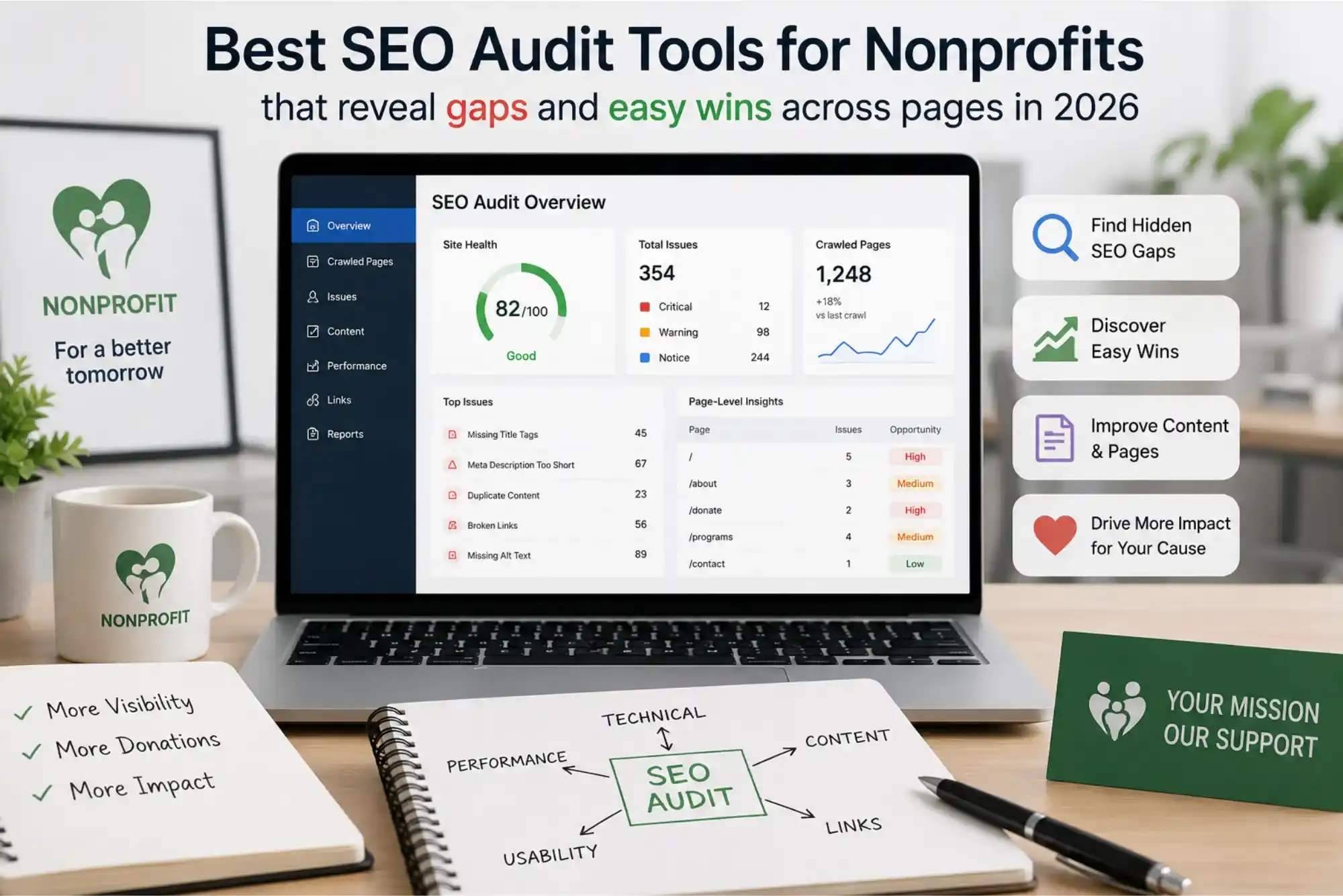
Nonprofits rely heavily on online visibility to attract donors, volunteers, advocates, and community support. Yet many organizations struggle to understand why their websites fail to rank well despite publishing valuable content and maintaining active outreach efforts. The answer often lies in hidden technical issues, missed optimization opportunities, and content gaps that can only be uncovered through a comprehensive SEO audit.
The best SEO audit tools for nonprofits in 2026 help organizations identify technical problems, improve user experience, discover keyword opportunities, and prioritize quick website improvements that can increase search visibility without requiring large marketing budgets.
As search engines continue refining how they evaluate websites, nonprofits need practical tools that simplify SEO analysis and turn complex data into actionable recommendations. Whether managing a small charity website or a large nonprofit portal, the right audit tool can reveal easy wins that improve rankings, increase organic traffic, and strengthen digital outreach efforts.
Why SEO Audits Matter More for Nonprofits in 2026
Unlike commercial businesses with substantial advertising budgets, nonprofits often depend on organic search traffic to connect with supporters. Every missed ranking opportunity can translate into fewer donations, lower event participation, and reduced community engagement.
An SEO audit helps organizations identify:
- Broken pages affecting user experience
- Technical errors limiting search visibility
- Missing metadata and content optimization issues
- Slow-loading pages
- Mobile usability problems
- Internal linking gaps
- Keyword opportunities competitors are capturing
- Content that no longer meets user intent
Many nonprofits invest time creating valuable educational resources, yet fail to achieve meaningful search visibility because foundational SEO issues remain unresolved.

What Makes an SEO Audit Tool Valuable for Nonprofits?
The ideal audit platform should provide more than technical reports. Nonprofit teams often have limited resources, so tools must help prioritize tasks with the greatest impact.
Effective nonprofit SEO audit tools typically offer:
| Feature | Why It Matters |
|---|---|
| Technical Site Audits | Identifies crawl and indexing issues |
| Content Analysis | Finds optimization opportunities |
| Keyword Gap Reports | Discovers missed ranking opportunities |
| Backlink Monitoring | Tracks authority and referral sources |
| Mobile Optimization Checks | Improves accessibility and engagement |
| Priority Recommendations | Focuses resources on high-impact fixes |
| Reporting Dashboards | Simplifies stakeholder communication |
Best SEO Audit Tools for Nonprofits in 2026
1. Semrush Site Audit
Semrush remains one of the most comprehensive SEO platforms available. Its Site Audit feature provides a complete overview of website health, technical performance, crawlability, and optimization opportunities.
For nonprofits managing large content libraries, Semrush helps identify duplicate content, broken internal links, missing tags, and keyword opportunities.
Key strengths include:
- Comprehensive technical audits
- Keyword gap analysis
- Content optimization suggestions
- Competitor benchmarking
- Backlink monitoring
Organizations focused on broader digital growth can also benefit from strategies discussed in professional SEO service optimization approaches, many of which apply equally to nonprofit websites.
2. Ahrefs Site Audit
Ahrefs continues to be a powerful choice for nonprofits seeking deeper insights into search visibility and content performance.
The platform excels at identifying:
- Broken links
- Indexability issues
- Content decay
- Internal linking weaknesses
- Keyword opportunities
Its visual reporting makes it easier for nonprofit marketing teams to communicate SEO priorities to leadership and board members.
3. Screaming Frog SEO Spider
Screaming Frog remains one of the most respected technical SEO audit tools available. Although it requires a slightly steeper learning curve, it delivers exceptional value for organizations wanting complete visibility into site structure.
The software can uncover:
- Broken pages
- Redirect chains
- Duplicate metadata
- Orphan pages
- Large image files
- Crawl errors
For nonprofits managing extensive educational resources or campaign pages, these insights can reveal substantial optimization opportunities.
4. Google Search Console
Google Search Console remains one of the most important free SEO tools available to nonprofits.
It provides direct insights from Google regarding:
- Search impressions
- Clicks
- Indexing issues
- Core Web Vitals
- Page experience signals
- Search performance trends
Because the data comes directly from Google’s ecosystem, Search Console often reveals issues that third-party platforms may miss.
5. SE Ranking Website Audit
SE Ranking has become increasingly popular among nonprofits due to its balance of affordability and functionality.
The platform offers:
- Website health scoring
- Technical SEO audits
- Keyword tracking
- Competitor analysis
- Backlink monitoring
- Actionable recommendations
Smaller nonprofit teams often appreciate the user-friendly interface and straightforward reporting.
6. Sitebulb
Sitebulb specializes in technical website analysis and visual reporting.
Instead of overwhelming users with data, it presents findings through intuitive visualizations that help teams understand:
- Site architecture
- Crawl depth issues
- Internal linking opportunities
- Content duplication
- Indexing problems
This approach makes complex SEO concepts easier for nonprofit stakeholders to understand and approve.
Common Website Gaps Nonprofits Often Discover During Audits
SEO audits frequently reveal recurring issues across nonprofit websites.
Weak Internal Linking Structures
Many organizations publish valuable resources but fail to connect related pages effectively. Strong internal linking helps users navigate content while improving search engine understanding of website structure.
Website architecture and usability often play a major role in search performance, which is why many organizations focus on aligning website design with strategic goals during optimization initiatives.
Outdated Content
Older articles frequently lose rankings when information becomes outdated. Refreshing content with current information can restore visibility and improve engagement.
Technical Performance Issues
Slow-loading pages continue to affect rankings and user experience. Audits often uncover oversized images, unnecessary scripts, and server response delays.
Missing Metadata
Many nonprofit websites have incomplete title tags, meta descriptions, or image alt text, limiting their ability to communicate relevance to search engines.
How to Prioritize Easy SEO Wins
Not every audit recommendation requires major development resources. Some improvements can generate meaningful results with minimal effort.
Examples of easy wins include:
- Updating title tags and meta descriptions.
- Fixing broken internal links.
- Compressing large images.
- Improving page headings.
- Adding missing alt text.
- Refreshing outdated content.
- Improving internal content connections.
- Resolving duplicate page titles.
These relatively small changes can improve crawl efficiency, user experience, and search visibility.
Using SEO Audits to Improve Donor and Volunteer Acquisition
SEO is not solely about rankings. For nonprofits, the ultimate goal is increasing engagement and advancing organizational missions.
A well-executed audit can help identify opportunities to:
- Increase donation page visibility
- Improve volunteer recruitment pages
- Enhance educational content reach
- Strengthen local search presence
- Improve event promotion pages
- Boost campaign discoverability
Many organizations also benefit from strengthening their broader digital infrastructure through robust web solutions that support long-term growth and website performance improvements.
Evaluating SEO Audit Reports Effectively
Receiving an audit report is only the first step. The real value comes from understanding which recommendations deserve immediate attention.
Focus on issues that affect:
- Indexability
- Crawlability
- User experience
- Page speed
- Content quality
- Conversion paths
Technical scores can be useful indicators, but they should not distract from improvements that directly support organizational objectives.
For broader optimization strategies, nonprofit teams may also review resources discussing online visibility and digital optimization best practices that complement technical SEO efforts.
Free vs Paid SEO Audit Tools for Nonprofits
| Category | Free Tools | Paid Tools |
|---|---|---|
| Cost | Low or none | Subscription required |
| Data Depth | Basic to moderate | Extensive |
| Competitive Analysis | Limited | Advanced |
| Technical Audits | Basic | Comprehensive |
| Reporting | Simple | Detailed and customizable |
| Keyword Research | Limited | Extensive |
Smaller nonprofits may achieve significant results using free tools such as Google Search Console and PageSpeed Insights. Larger organizations often benefit from the deeper analysis offered by premium platforms.
For additional technical SEO guidance and best practices, consult [Insert relevant reference link here].
Frequently Asked Questions
What is the best SEO audit tool for a small nonprofit?
Google Search Console is often the best starting point because it provides free access to search performance data, indexing information, and website health insights directly from Google.
How often should nonprofits perform SEO audits?
Most nonprofits should conduct comprehensive SEO audits at least quarterly, while monitoring critical performance metrics monthly.
Can nonprofits improve rankings without hiring an SEO agency?
Yes. Many nonprofits achieve measurable improvements by using audit tools to identify technical issues, optimize content, strengthen internal linking, and improve page performance.
Are technical SEO issues more important than content quality?
Both matter. Technical SEO ensures search engines can access and understand content, while quality content helps satisfy user intent and earn rankings.
Conclusion
The best SEO audit tools for nonprofits in 2026 do far more than generate technical reports. They reveal hidden obstacles, uncover growth opportunities, and help organizations allocate limited resources more effectively. By combining regular audits with strategic content improvements, nonprofits can strengthen online visibility, reach more supporters, and achieve greater impact through organic search. Whether using free platforms like Google Search Console or advanced solutions such as Semrush, Ahrefs, and Sitebulb, the key is turning audit insights into meaningful action that supports long-term mission success.
Related Reading: Best SEO Reporting Tools for Nonprofits tracking keyword wins and lost opportunities in 2026
Related Reading: ما الفرق بين الدهون الثلاثية والكوليسترول؟
Related Reading: كل ما تحتاج معرفته عن تخصص دماغ وأعصاب وصحة الجهاز العصبي